

Originally published 08/22/18. Revised 11/16/25 for Substack.
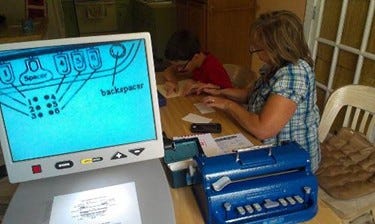
When our younger son’s vision diminished our world expanded to include Retinal Specialists, Certified Orientation and Mobility Specialists (COMS), and Teachers of the Visually Impaired (TVI).
Our older son had no disabilities or conditions requiring special services, and we felt overwhelmed and ignorant about the process of obtaining proper services through the school system. We lived in a small, rural, southern town and Kai was the only child in the area with a degenerative eye disease. Anytime we had a question, the school administration answered “We don’t know. We’ve never done this before.” And neither had we. As a mom, I felt determined to give Kai every possible opportunity to succeed. I guzzled coffee, searched the web, cried, talked to other parents, and took the next best step.
The process at Kai’s school rolled out like this:
1. Functional Testing determined how Kai utilized his limited sight. By law, public schools must provide functional testing free of charge to every visually impaired child. Do not allow your child’s school to skip this step. Special education administrators often tell parents that their child doesn’t need vision services yet, but without functional testing, there is no way to know for sure, so insist on it.
2. The Individualized Educational Program (IEP) team met. Attendees included, me, the special education director, the school district’s TVI, the principal, and Kai’s general education teachers. Together we reviewed the results of the functional testing and created Kai’s first IEP to kick off in fifth grade. The plan outlined specific accommodations that Kai would receive, the amount of time he’d spend with specialized service providers, and goals. Goals are necessary to prove the plan is working.
Kai’s first accommodations included a seat near the teacher facing away from the windows because light hurt his eyes, extended time to complete tests and assignments, magnifiers, large print, testing in a quiet environment, the assistance of a special education coordinator who could help him read long sections of text or describe complex diagrams that were difficult for him to access with his limited vision.
Due to the nature of Kai’s diagnosis, we needed to prepare him to access classroom materials as his sight deteriorated. To ease his adaptation to blindness, we advocated to ensure that his blindness skills were always one step ahead of his sight loss. Kai’s first IEP services included weekly sessions with a TVI who taught him introductory braille and how to begin using assistive technology. He also received monthly orientation and mobility (O&M) lessons to introduce white cane travel.
The main goal we focused on in the beginning was to keep him on grade level with his peers while slowly integrating the new skills he learned.
Many days I felt like the battle to obtain and keep services was too intense. And throughout the years, I questioned the decision to keep Kai mainstreamed in our local public school. Occasionally we visited schools for the blind and found some to be excellent -- others not so much. Kai loved school and had a strong group of friends, so we believed staying in his neighborhood school would ensure inclusion and the most direct route to higher education and employment. But in my experience, mainstreaming only works when the parent(s)/guardian(s) partner with the school to create the plan and advocate fiercely for accountability.
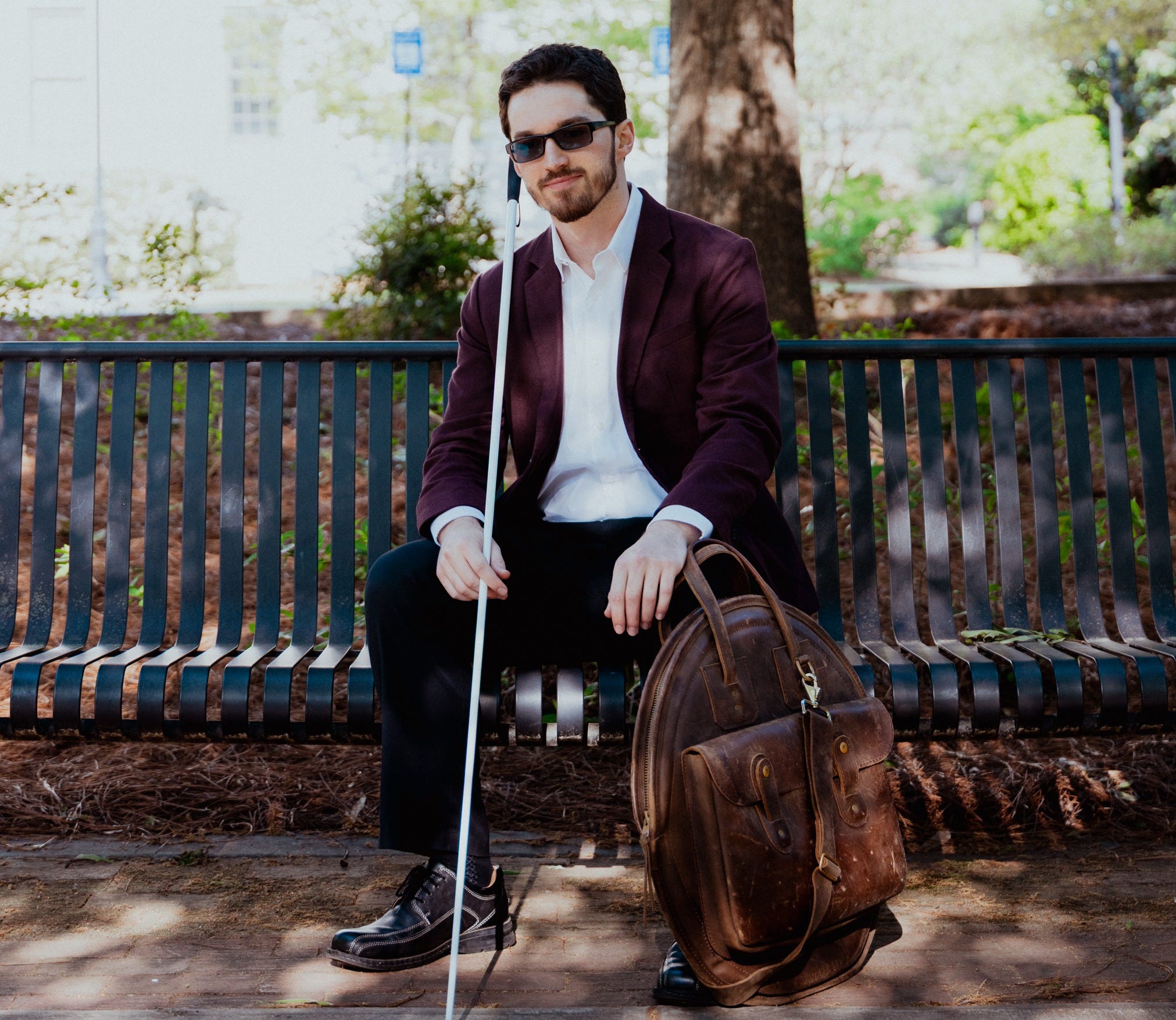
(Note: Thirteen years after diagnosis, Kai is about to graduate Summa Cum Laude from the University of Georgia. He’s the leader of a popular jazz band, and just applied to graduate schools in New York City.)
Please join the conversation.
Parents, post your experiences, questions, and concerns in the comments.
Blind and Low vision adults, your voices are always welcome here.
Blindness educators, if you have something to add please chime in.