

Hello, this is Kim and I’m excited to introduce you to a young optometrist doing important work. I had the pleasure of meeting “Sadik” on Capitol Hill. Enjoy!
_____________
by Dr. Abubakar Sadik Mohammed
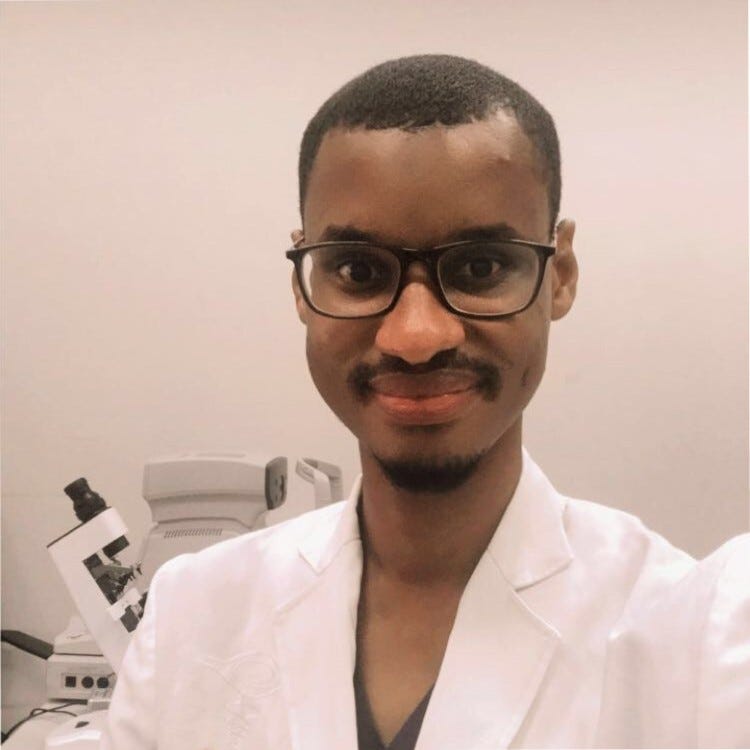
I have come to realize that some of the greatest opportunities to improve patients’ lives exist beyond the walls of the eye clinic. My name is Dr. Abubakar Sadik Mohammed, an Optometrist and a Graduate Research Assistant at the UAB School of Optometry. I am passionate about improving the quality of life of individuals living with vision impairment not only through my clinical expertise and research, but also through patient empowerment, policy advocacy, and community engagement.
As an optometrist, I have seen how vision loss affects individuals, their families and communities at large. Individuals diagnosed with blinding diseases learn to adapt, pursue their goals, and find strength in the face of uncertainty. I met Ms. Owens from Navigating Blindness through the Prevent Blindness ASPECT Patient Engagement Program. She is a devoted mother and a dedicated advocate whose son’s journey with cone rod dystrophy and autoimmune retinopathy shaped my perspective on patient advocacy. Through our conversations, I have gained a deeper understanding of the daily challenges individuals and families living with vision loss face, as well as the remarkable resilience they demonstrate navigating a world that is often built with sight in mind. This empowered me to stand alongside Ms. Owens and the Prevent Blindness ASPECT cohort, in advocating on Capitol Hill for legislation that advances early detection and expands access to vision care. Their lived experiences taught me that preserving vision is only one aspect of our responsibility as Clinicians. We have a duty to advocate for equitable eye care policies that enable people with vision loss to thrive and live independently.
In my years of practice, I have observed that early detection of vision anomalies is crucial to safeguarding sight and reducing preventable vision loss. Routine comprehensive eye examinations and timely vision screenings can identify many eye diseases before permanent damage occurs. For instance, glaucoma, often referred to as the “silent thief of sight,” may progress without symptoms until irreversible damage has occurred. Knowing this, it becomes imperative to support the Early Detection of Vision Impairments for Children (EDVI) Act. The EDVI Act would create the first statewide systems for early childhood vision screening and referrals, ensuring children receive timely diagnosis and intervention. I urge clinicians, researchers, educators, parents, caregivers, and community members to help advance this important legislation.
Receiving a diagnosis of vision loss can feel overwhelming, but no one should have to face that journey alone. Organizations such as Prevent Blindness, Navigating Blindness, American Foundation for the Blind, National Federation of the Blind, the Foundation Fighting Blindness, etc. provide reliable educational resources, peer support, rehabilitation services, advocacy opportunities, and training that help individuals and families navigate life with confidence and hope. For those interested, I highly recommend the Prevent Blindness ASPECT Patient Engagement Program, which empowers patients, caregivers, clinicians, and researchers to shape health policy and improve vision care for future generations.
Through collaborative effort, I believe we can build a more inclusive future where every child living with vision loss feels supported.
“Alone we can do so little; together we can do so much.”
~Helen Keller
Related resources:
The American Academy of Optometry ( American Academy of Optometry)
The Association for Research in Vision and Ophthalmology (ARVO | Homepage)
The Alliance for Eye and Vision Research (About Us | Alliance for Vision Research)
__________
In case you missed it: